
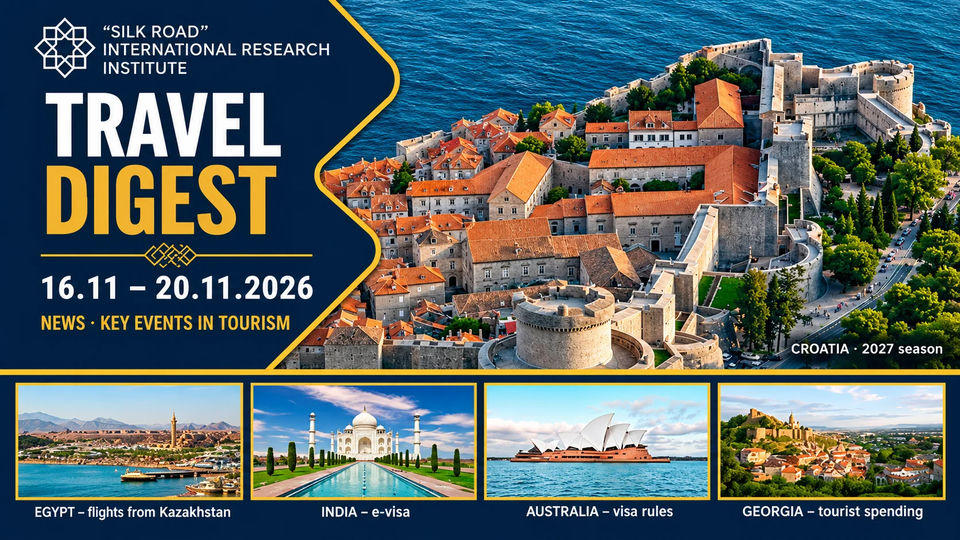
The full issue as a PDF.
Demand for air travel to the United Kingdom shifts in 2026.
https://www.visitbritain.org/research-insights/aviation-data?utm
According to the tourism organisation VisitBritain, interest in flights to the United Kingdom in September 2026 was up 5% on the same period of 2025.
The strongest growth came from Europe. Demand for short-haul flights from European countries rose by 29%, a sign of growing interest among European travellers in the UK as a destination for holidays, business trips and short breaks. At the same time, demand for long-haul flights fell by 21%. The picture is shaped by changing traveller preferences, air fares, economic factors and the international situation, which creates additional difficulties for airlines serving intercontinental routes. Interest in Scottish destinations is growing in particular. More and more travellers are considering trips not only to London but also to other parts of the UK, including Edinburgh, Glasgow and the country’s natural attractions.
Croatia prepares for the 2027
tourist season.
One of the main trends is a slowdown in early bookings. According to information gathered by the Croatian tourist board at the World Travel Market in London, advance bookings for 2027 are so far running more slowly than at the same point last year. Tourists are increasingly postponing the purchase of trips until the last weeks and even days before departure. This does not necessarily mean weaker demand, but it makes it harder for hotels and tour operators to plan the season.
The rising cost of aviation fuel remains a serious factor. According to information passed to the Croatian side by British Airways representatives, the price of jet fuel has risen by 114% over the year. This may push up air fares and affect airlines’ decisions on opening new routes.
In response, Croatia plans to increase funding for strategic cooperation with airlines and international tour operators by about 20% in 2027.
Austria records growth in tourist flows and approaches new record levels.
According to preliminary data from Statistics Austria, hotels, guesthouses and other accommodation establishments recorded 12.97 million overnight stays in September 2026, 5.8% more than in September last year. Tourist arrivals reached 4.39 million, an increase of 6.5%. Over the summer season from May to September, overnight stays totalled 76.39 million, 3% above the same period of 2025. In January–September 2026 Austria recorded 39.53 million arrivals and 130.97 million overnight stays. Arrivals grew by 3.5% and overnight stays by 2%. Notably, for the first time since records began, overnight stays in the first nine months of the year exceeded 130 million. About 74.9% of all overnight stays were accounted for by foreign tourists, confirming the major role of international inbound tourism in the country’s economy. Germany remains Austria’s main foreign market: over the summer season German travellers accounted for 29.28 million overnight stays, 2.1% more than a year earlier.
New EU tourism strategy for 2026–2030.
https://transport.ec.europa.eu/?utm
The European Commission has presented a new EU sustainable tourism strategy for 2026–2030.
The main aim of the strategy is to strengthen the competitiveness of the European tourism sector, make Europe more attractive to foreign tourists and ensure the sustainable development of the industry. Particular attention is paid to supporting small and medium-sized tourism businesses, developing regional and rural tourism, digitalisation, environmental standards and attracting investment in tourism infrastructure.
In particular, this involves promoting Riga as an international tourist destination, developing resort tourism in Jūrmala, and supporting rural and nature tourism in Latgale, Vidzeme and Kurzeme. The development of cross-border tourist routes between Latvia, Lithuania, Estonia and Finland is also gaining importance. Under the European policy, the plans include wider funding opportunities for tourism projects, modernisation of hotel infrastructure, the introduction of digital solutions and better quality of tourism services.
Norway becomes Sweden’s largest foreign tourism market.
Norway has once again become Sweden’s largest foreign tourism market, overtaking Germany, which had held first place.
According to official statistics from the Swedish Agency for Economic and Regional Growth (Tillväxtverket), between June and August 2026 Norwegian tourists spent 2,520,373 nights in Swedish hotels, campsites and other commercial accommodation. This is 14.3% more than in the same period of 2025.
For comparison:
Norway — 2.52 million overnight stays (+14.3%).
Germany — 2.49 million overnight stays (−2.1%).
United States — 743 thousand overnight stays (+10.5%).
Denmark — 672 thousand overnight stays (+0.4%).
Growth was especially strong in the hotel sector: overnight stays by Norwegian tourists in hotels rose by 33%. In total, Sweden recorded 31.2 million tourist overnight stays in summer 2026, 3.6% more than in the previous summer.
Foreign tourists accounted for 9.8 million overnight stays.
Bulgaria increases tourism funding for 2027.
The main aim of the increase is to attract foreign tourists, expand air links and extend the tourist season. The new model provides for direct cooperation between the state and international airlines, airports and major tour operators. Particular attention will be paid to attracting tourists from Germany and other European countries and to increasing the number of flights to Varna and Burgas airports. In addition, the government plans to reform the tourist tax: at least 50% of the revenue is to be spent on advertising and on improving transport access to the destinations concerned. Local authorities and representatives of the tourism business will be able to take part in setting funding priorities. According to the Ministry of Tourism, the new measures could bring an additional 500 thousand to 1 million tourist overnight stays in 2027 compared with 2026.
Bulgaria’s long-term goal is to double the number of foreign tourists by 2030 and raise the direct contribution of tourism to GDP by at least two percentage points.
Albania received 10.73 million foreign visitors in January–September 2026.
According to the Albanian Institute of Statistics (INSTAT), about 10.73 million foreign citizens visited the country in the first nine months of 2026.
This is 4.9% more than in the same period of 2025, when about 10.23 million entries were recorded.
In September 2026 alone Albania received about 1.29 million foreign visitors, 2.1% above the figure for September last year.
The positive trend shows that interest in Albania as a tourist destination is holding up and that its position in the international tourism market is strengthening. The growth in arrivals creates additional opportunities for the hotel business, transport infrastructure, the restaurant sector and excursion services.
The development of tourism outside the traditional summer season is becoming especially important, as it will allow Albania gradually to strengthen its status as a year-round destination.
Hotel accommodation prices rise
in Spain.
https://www.ine.es/dyngs/Prensa/CTH0926.htm?print=1&ut
Hotel accommodation prices in Spain continue to rise amid strong demand from foreign tourists.
According to Spain’s National Statistics Institute (INE), overnight stays in the country’s hotels exceeded 40.1 million in September 2026, up 1.7% on the same period last year. At the same time hotel prices rose by 6.7%, and the average room rate per night reached 141.6 euros. The price increase is linked to steady tourist demand, higher spending by foreign travellers and high occupancy in popular resort regions.
Interest remains strongest in Barcelona, Madrid, the Balearic and Canary Islands, as well as the resorts of Andalusia. With demand growing, the hotel business continues to revise its rates, especially in popular tourist locations. Higher accommodation prices boost the hotel sector’s revenue, but they also raise travellers’ costs and may affect the choice of destination and the length of trips.
WTTC launches PEO indices to assess the sustainability of tourism.
The World Travel & Tourism Council’s new Power, Efficiency and Opportunity indices assess economic power, environmental efficiency and employment opportunities. For many years tourism authorities pursued a single goal: growth in arrivals. It did not matter how long travellers stayed or how much they spent, as long as the figure kept rising. In a world where local residents are being pushed out of their own cities by short-term rentals, and unprecedented heatwaves cause wildfires and other disruptions to everyday life, attention to sustainable tourism has grown markedly.
Sustainable tourism is understood as tourism that minimises its impact on the environment while benefiting local communities, and there is now a new way to measure it. The World Travel & Tourism Council (WTTC) has launched the new Power, Efficiency & Opportunity (PEO) indices, which rank countries by the environmental impact of tourism, the sector’s contribution to employment and its economic scale.
Georgia sees a change in the tourism spending of foreign visitors.
https://www.geostat.ge/media/83691/Inbound-Tourism-Statistics---%28III-Quarter%2C-2026%29.pdf?utm
In the third quarter of 2026 Georgia saw an interesting trend: although the number of foreign tourists increased, their total spending fell noticeably. According to the National Statistics Office of Georgia (Geostat), foreign travellers spent 5.7 billion lari in the country between July and September, 8.2% less than in the same period of 2025.
The number of international visits rose by 3.6% to 3.1 million. Overnight tourist trips increased by 4.7%, and the average length of stay rose from 6.3 to 6.4 nights.
Average spending per trip fell by 11.1% — from 2,467.5 to 2,194.4 lari. This shows that tourists have become more careful about their spending and more often choose budget options for accommodation, food, shopping and entertainment.
The largest share of tourist spending went on accommodation — 36.7% of the total. Food and drink accounted for 30.1%, and shopping for 15.2%.
Kazakhstan launches regular direct
flights to Egypt.
https://qazinform.com/news/kazakhstan-to-launch-direct-flights-to-egypt-this-winter-d67b1b?utm
On 13 November 2026 Air Astana announced the launch of regular direct flights from Kazakhstan to the Egyptian resort of Sharm El Sheikh. Flights will start on 10 December from Almaty and on 11 December from Astana.
The flights will be operated by Airbus A321 aircraft twice a week from each city: from Almaty on Mondays and Thursdays, and from Astana on Tuesdays and Fridays.
Flight time:
Almaty — Sharm El Sheikh: 7 hours 30 minutes.
Astana — Sharm El Sheikh: 6 hours 55 minutes.
Lowest return fares:
From Almaty: from 283,690 tenge in economy class.
From Astana: from 283,734 tenge in economy class.
Business class from Almaty: from 597,864 tenge.
Business class from Astana: from 588,932 tenge.
An important change is the move from a purely charter model to scheduled services. Passengers will now be able to buy tickets themselves through the Air Astana website and mobile app, as well as through travel agencies and tour operators.
Belarus develops visa-free tourism.
In 2026 Belarus continues to develop visa-free tourism, attracting foreign travellers from European countries. According to the State Border Committee of Belarus, between 1 January and 10 November 2026 the country was visited by 216,588 foreign citizens from 38 European states under the visa-free regime. Since the programme was introduced in April 2022, the total number of visits has reached almost 1.475 million people.
Most visitors come from neighbouring countries: Lithuania — 743,484 people, Latvia — 465,165 and Poland — 167,991. The extension of the visa-free regime in July 2024 made it possible to attract tourists from a further 35 European states, including Germany, France, Italy, Finland, Sweden and Norway.
By decision of the Belarusian authorities, the visa-free regime for citizens of 38 European states has been extended until 31 December 2026 inclusive. Most citizens of these countries may stay for up to 30 days from the date of entry, but no more than 90 days in a calendar year.
Separate conditions apply to citizens of Lithuania, Latvia and Poland, allowing stays of up to 90 days.
More than 1.5 million tourists visited
Tajikistan in nine months.
https://qazinform.com/news/over-15-mln-tourists-visit-tajikistan-over-9-months-3419cf?utm
According to the Committee for Tourism Development under the Government of the Republic of Tajikistan, of the total number of foreign tourists 154,240 people came from countries outside the Commonwealth of Independent States (CIS) and 1,396,960 from CIS countries. These figures reflect growing international interest in Tajikistan and its tourism potential. Tajikistan has extensive tourism resources, including unique natural landscapes, majestic mountains, picturesque lakes, historical and cultural monuments and rich national traditions.
In recent years the country has taken a number of important steps to develop the tourism industry and attract more foreign tourists. This year Tajikistan adopted a Programme for the Development of Domestic Tourism for 2027–2031. According to the programme, the country has more than 400 tourist sites, 1,000 gorges, 1,000 lakes and many other attractions that support the development of domestic tourism. Conditions have also been created for opening and promoting new tourist destinations.
An airport terminal is being built at Issyk-Kul
and a resort with a restaurant inside an aircraft is being planned.
https://economist.kg/en/issyk-kul-airport-terminal-and-aviator-resort-project/?ut
Two major projects aimed at developing tourism and aviation infrastructure are under way in the Issyk-Kul region of Kyrgyzstan.
In the village of Tamchy, construction continues on a new international terminal of Issyk-Kul airport with an area of about 18 thousand square metres. The three-storey building will have a design shaped like a sea wave. The project includes modern check-in and waiting areas, security systems and the necessary engineering infrastructure. The terminal’s expected capacity is up to 450 passengers per hour. The new facility will increase the airport’s capacity and create the conditions for expanding international air links with the resort region.
The second project provides for the creation of a year-round health resort complex, Aviator, in the village of Ornok on a site of about 10 hectares. One of its main features will be a restaurant fitted out inside a real Airbus A300 aircraft.
India plans to introduce free e-visas for tourists from ASEAN countries.
Indian Prime Minister Narendra Modi announced this on 17 November at the 23rd India–ASEAN summit in Manila. The initiative covers all 11 member states: Brunei, Vietnam, Indonesia, Cambodia, Laos, Malaysia, Myanmar, Singapore, Thailand, Timor-Leste and the Philippines.
The plan is to waive the visa fee, not the visa itself: an application will still have to be submitted through the official portal.
The start date and the application procedure have not yet been announced. Citizens of Thailand and the Philippines already receive free e-visas to India. The proposal is part of a package of 9 initiatives to strengthen ties with the countries of South-East Asia.
The initiative is expected to give an additional boost to inbound tourism to India and to strengthen tourism ties with the countries of South-East Asia. Waiving the visa fee will reduce travellers’ costs and make trips more affordable, especially for tourists planning short holidays, cultural and educational itineraries and business trips.
Australia tightens rules for tourist visas from 28 November.
https://www.travelandtourworld.com/news/article/3og5pvkoe7q3/
Australia is tightening the rules for visitor visas by introducing the mandatory condition 8503 “No Further Stay” for all main categories of visitor visa. The change takes effect on 28 November 2026 and applies to the Visitor visa (subclass 600), Electronic Travel Authority (subclass 601) and eVisitor (subclass 651). Under the new requirements, foreign citizens holding such visas will not be able to apply freely for most other visas while in Australia. To change visa status, they will as a rule have to leave the country and apply for a new visa from abroad. The changes are intended to prevent visitor visas from being used as a tool for long-term residence and for moving to other immigration categories without leaving the country. Tourist trips, family visits and short business visits remain possible, provided visa conditions are observed. In certain exceptional circumstances the law allows condition 8503 to be waived.
Air capacity between China and Japan falls by 42% over two winters.
The diplomatic conflict between Beijing and Tokyo continues to redraw the map of Asian air travel.
According to Aviation Week calculations based on OAG data, just under 6 million two-way seats are scheduled between mainland China and Japan in the winter 2026/27 timetable. This is 16% fewer than last winter and well below the 10.34 million of winter 2024/25. The number of direct airport-pair routes has fallen from 112 to 42.
Airlines of both countries are moving aircraft to the Korean market. In the first nine months of 2026 the Republic of Korea became Japan’s largest inbound tourism market with 8.26 million trips, an increase of 22%.
The reduction in air traffic between China and Japan is linked not only to the change in diplomatic relations but also to airlines revising their plans for regional routes. With demand falling, carriers are adjusting flight frequencies, cancelling some services and redeploying aircraft to routes in greater demand.
The United States remains a promising market for Germany.
https://www.germany.travel/en/newsroom/newsroom-detail.html?id=3468363&utm_
According to a study by the German National Tourist Board (GNTB), 38% of surveyed Americans interested in international travel consider Germany a possible destination for a future trip. In addition, about 83% of the Americans surveyed regard Germany as an attractive tourist destination, 82% note the variety of tourist attractions, and 81% rate the country’s safety and hospitality positively.
According to the GNTB forecast, tourist arrivals from the United States may reach 3.17 million in 2026, 0.5% more than in 2025. American tourists are of great economic importance to Germany. More than 60% of travellers from the US belong to the higher and premium spending categories. They more often choose quality hotels, private tours, cultural events and special tourist programmes.
Especially popular with American guests are Berlin, Munich, Frankfurt, Hamburg and Germany’s historic cities.
Related news
Travel Digest: 09.11–013.11.2026
The week's key news and events in the tourism industry (09.11–13.11.2026). Full issue as a PDF.
Travel Digest: 02.11–06.11.2026
The week's key news and events in the tourism industry (02.11–06.11.2026). Full issue as a PDF.

Delegation from Malaysia’s USIM Visits the Silk Road International Research Institute
On November 17, 2026, a delegation from the University of Islamic Sciences of Malaysia (Universiti Sains Islam Malaysia - USIM) paid an official visit to the Silk Road International Research Institute under the Silk Road International University of Tourism and Cultural Heritage.